There are about $1.53 trillion of outstanding student loans. (See https://www.zerohedge.com/news/2018-08-28/how-us-education-became-debt-sentence.) This number goes up more than $200 billion per year and is expected to be nearly $2 trillion by 2020, and $3.3 trillion by 2024. Somewhere between 33% and 40% of this will be defaulted on.
It is not clear (to me) exactly who this is owed to, let's just call it Sallie Mae, although I don't think that is quite right, but let's pretend it is. Sallie Mae sells bonds to finance its activities, but all of the bonds are bought by the Treasury. In theory, students will get better jobs and just pay it all back. However, at least $1 trillion will be in default by 2024.
What happens to this defaulted debt? It can't be discharged in bankruptcy, so it won't go away. It is guaranteed by the U.S. Treasury, but I don't think the Treasury pays the accrued interest. If you have a debt, but never pay it back and never pay interest on it, does it exist?
So the existential question is, does this debt "really" exist? Of course it exists, it is in a computer somewhere but does it "really" exist? There are two answers. First, yes, and it should be added to the national debt because it is guaranteed. Second, no. It is an "off-balance-sheet" investment by the Treasury, a bad investment at that, but the funding for this came from borrowed cash, and it is already part of the national debt. I am leaning towards the second answer, but am still puzzling this.
Now the real questions. If student loan debt is really already part of the national debt and the national debt will never be paid back, then why does it matter if student loans are being default on? And why should anyone ever repay their student loans, except as a moral obligation by those who benefited? Are we inexorably headed indirectly into American-style socialism, with free college education for all? If we are, who is harmed by this? Did I just talk myself into becoming a socialist? What differentiates Bernie socialism from Venezuela socialism?
Thursday, August 30, 2018

Tuesday, August 28, 2018
On Derision
When the tongue becomes a clapper in a cardboard bell,
when words fall dead from the air with a charnel smell;
when all that's right and good are declared to devils be,
And fools all sing the praises of each vile depravity:
Then wear you their derision with a kind of humble pride,
For 'tis no shame to garner such from people dead inside.
And should they corner you, stand fast upon your ground,
For better to be a noble ghost, than a cuck the world renowned.
Thursday, August 23, 2018
48-year cycle of Renegade Presidents
I notice commonalities between these presidents.
Andrew Jackson was elected president in 1828. He is a personal hero of Donald Trump. He is best known for kicking the Indians out of Georgia (although the "Trail of Tears" happened under his successor Martin Van Buren), for supposedly saying the Supreme Court has made its decision, now let them enforce it, and for abolishing the Second Bank of the United States, and for getting rid of the national debt (for the only time in the country's history).
Rutherford B Hayes was elected president in 1876 (48 years after Andrew Jackson). He lost the popular vote to Democrat Samuel J Tilden but won in the Electoral College in an intensely disputed election (similar in some respects to the 2000 dispute between Bush and Gore). His name is almost synonymous with ending the Reconstruction of the South, which some people believe should have been continued.
Warren G Harding was elected President in 1920 (44 years after Rutherford B Hayes). He is known for being a tool of Wall Street (he appointed Andrew Mellon as Secretary of Treasury), for cutting taxes (which substantially increase tax revenues), and for opposing bonuses for WWI soldiers. He gets credit for the booming economy of the 1920s:
 |
| Andrew Jackon |
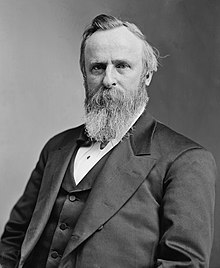 |
| Rutherford B Hayes |
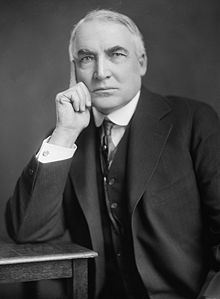 |
| Warren G Harding |
The top marginal rate was reduced annually in four stages from 73% in 1921 to 25% in 1925. Taxes were cut for lower incomes starting in 1923. The lower rates substantially increased the money flowing to the treasury. They also pushed massive deregulation and federal spending as a share of GDP fell from 6.5% to 3.5%. By late 1922, the economy began to turn around. Unemployment was pared from its 1921 high of 12% to an average of 3.3% for the remainder of the decade. The misery index, which is a combination of unemployment and inflation, had its sharpest decline in U.S. history under Harding. Wages, profits, and productivity all made substantial gains; annual GDP increases averaged at over 5% during the 1920s. Libertarian historians Larry Schweikart and Michael Allen argue that, "Mellon's tax policies set the stage for the most amazing growth yet seen in America's already impressive economy. Wikipedia
He is also known for scandals (the Teapot Dome Scandal) and for his extramarital affairs, both of which came to light only after his death.
Richard M Nixon was elected President in 1968 (48 years after Harding). He ran on a platform of law and order and rode the wave of outrage against the Supreme Court ('impeach Earl Warren"). He was not a conservative - he imposed wage-and-price controls, he established the Environmental Protection Agency, he enforced desegregation,and he opened up relations with Red China. After the Watergate scandal, he resigned on August 9, 1974 rather than be impeached.
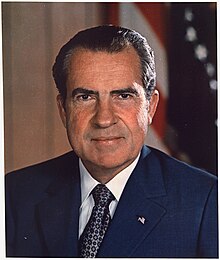 |
| Richard M Nixon |
Wednesday, August 22, 2018
48-year cycle
I remember when I was a kid reading "The Great Depression of 1990", which mentioned the Kondraetiff cycle, which was 51 years long. But what if the modern version of it is about 48 years long.
Compare October 28-29, 1929 (when the stock market dropped 24% over the two days) with October 19, 1987 (when the stock marked dropped 23%). Of course there were major differences, since the 1987 crash did not cause a recession, but this shows the 48-year cycle.
I've already mentioned Trump and Nixon, but look who was president 48 years before Nixon - Warren G Harding, whose administration was scandal-ridden.
Compare October 28-29, 1929 (when the stock market dropped 24% over the two days) with October 19, 1987 (when the stock marked dropped 23%). Of course there were major differences, since the 1987 crash did not cause a recession, but this shows the 48-year cycle.
I've already mentioned Trump and Nixon, but look who was president 48 years before Nixon - Warren G Harding, whose administration was scandal-ridden.
The Great Recession of 2021-2023
Ok, I don't have any inside information or secret wisdom about this. But I am thinking about the parallels between Richard Nixon and Donald Trump. I don't care about the politics of this, but I wonder if there are some economic parallels.
LBJ was famous for the Civil Rights Act of 1974. Under Obama, the Supreme Court voted to require homosexual marriage in 2015. Nixon ran on a platform of "law and order" and his supporters were motivated by the desire to change the Supreme Court, which happened with the replacement of Earl Warren with Warren Earl Burger, who was supposedly a conservative (but voted for Roe v Wade). And of course, Trump supporters are motivated by the desire to change the Supreme Court, with Neil Gorsuch being appointed and Brett Kavanaugh under consideration.
Jump ahead to the theory of a 48-year cycle.
January 11, 1973, the DJIA hit a cycle high of 1051.70. It then dropped 10% within a month and entered into a massive bear market with a low of 577 in December 6 1974 and did not exceed the 1973 milestone until 1982. The recession officially began in November 1973 and it lasted until March 1975. But then stagflation continued until 1982.
Suppose the 48 year cycle matches exactly (of course it won't) ? Then we can predict these key dates:
November 2020 - Trump re-elected
January 11, 2021 - DJIA hits all-time high.
November 2021 - Recession officially begins
August 8, 2022 - Trump resigns instead of facing impeachment
December 6, 2022 - DJIA hits low
March 2023 - Recession officially over
2023 to 2030 - New president faces Great Malaise. Even through the recession is over, it feels like it is continuing.
So what I am predicting from this superficial analysis is that the Good Times under our favorite president will last about another 2 years, before we sink into a 10 year period of Great Recession / Great Malaise. (And then we will go back to a brief period of "normalcy" before everything goes to hyper-inflationary hell a al Venezuela).
LBJ was famous for the Civil Rights Act of 1974. Under Obama, the Supreme Court voted to require homosexual marriage in 2015. Nixon ran on a platform of "law and order" and his supporters were motivated by the desire to change the Supreme Court, which happened with the replacement of Earl Warren with Warren Earl Burger, who was supposedly a conservative (but voted for Roe v Wade). And of course, Trump supporters are motivated by the desire to change the Supreme Court, with Neil Gorsuch being appointed and Brett Kavanaugh under consideration.
Jump ahead to the theory of a 48-year cycle.
January 11, 1973, the DJIA hit a cycle high of 1051.70. It then dropped 10% within a month and entered into a massive bear market with a low of 577 in December 6 1974 and did not exceed the 1973 milestone until 1982. The recession officially began in November 1973 and it lasted until March 1975. But then stagflation continued until 1982.
Suppose the 48 year cycle matches exactly (of course it won't) ? Then we can predict these key dates:
November 2020 - Trump re-elected
January 11, 2021 - DJIA hits all-time high.
November 2021 - Recession officially begins
August 8, 2022 - Trump resigns instead of facing impeachment
December 6, 2022 - DJIA hits low
March 2023 - Recession officially over
2023 to 2030 - New president faces Great Malaise. Even through the recession is over, it feels like it is continuing.
So what I am predicting from this superficial analysis is that the Good Times under our favorite president will last about another 2 years, before we sink into a 10 year period of Great Recession / Great Malaise. (And then we will go back to a brief period of "normalcy" before everything goes to hyper-inflationary hell a al Venezuela).

Friday, August 17, 2018
Everything in China is falling apart
These guys are walking around a building that is only 3 years old and in a horrible state of disrepair. All of the recent construction in China is done very shoddily.
Tuesday, August 14, 2018
Kim Dotcom warns of imminent economic collapse

https://www.zerohedge.com/news/2018-08-13/kim-dotcom-warns-economic-collapse-says-buy-gold-and-bitcoin
“Top economists around the world agree that US debt is unsustainable. There is no sugar coating this. US Empire is broke. Prepare for collapse.”
My comments; Kim Dotcom is a very smart guy, but I don't believe that there is an imminent collapse. There seems to be a 3rd world currency crisis, similar to 1998, but that doesn't necessarily mean there will be a recession soon. The recession could be 2 or 3 years away. And even a recession doesn't mean a collapse soon.
Tuesday, August 7, 2018
And so it begins
On 6/29/18, the Debt Held By the Public was at $1.5466 x 10^13.
On 7/31/18, the Debt Held By the Public was at $1.5569 x 10^13, an increase of $103 billion in one month.
I expect it to increase by at least $100 billion per month from here on out (except for during the months of April, when the government gets lots of tax payments). And the economy is supposedly booming. Just wait until the recession starts (if it ever does). And interest rates are still low - as of today (8/6), the 10-year is at 2.94% and the 30-year is at 3.08%.
So I call this month 1 of the long-forecasted slow-motion meltdown of the economy.
On 7/31/18, the Debt Held By the Public was at $1.5569 x 10^13, an increase of $103 billion in one month.
I expect it to increase by at least $100 billion per month from here on out (except for during the months of April, when the government gets lots of tax payments). And the economy is supposedly booming. Just wait until the recession starts (if it ever does). And interest rates are still low - as of today (8/6), the 10-year is at 2.94% and the 30-year is at 3.08%.
So I call this month 1 of the long-forecasted slow-motion meltdown of the economy.
Thursday, July 26, 2018
The Magic Money Tree
The magic money tree is real: Treasury confirms taxes are not needed to fund government spending
https://mikenormaneconomics.blogspot.com/2018/07/ben-wray-magic-money-tree-is-real.htmlhttps://www.commonspace.scot/articles/13079/magic-money-tree-real-treasury-confirms-taxes-are-not-needed-fund-government-spending
Money does grow on trees! The good news is that nobody needs to pay taxes. The bad news is that this will cause the whole economic system to hyperinflate. But not in the next 10 years so who cares?
Thursday, July 19, 2018
One Trillion Dollar Deficit in 2019
WASHINGTON—The Trump administration expects annual budget deficits to rise nearly $100 billion more than previously forecast in each of the next three years, pushing the federal deficit above $1 trillion starting next year. The revisions, which went largely unnoticed when the White House submitted its annual update to Congress last week, reflect the cost of federal spending increases agreed to earlier this year and higher interest payments.
The White House budget office now estimates that the deficit will rise to nearly $1.1 trillion in the fiscal year that begins this October, or 5.1% of gross domestic product, up from $984 billion projected in February’s budget proposal. The U.S. ran a deficit of $666 billion for the fiscal year that ended Sept. 30, 2017, or 3.4% of GDP.
Comment: This is without a recession. When the recession starts, the deficit will quickly top $2 trillion per year because of decreased tax revenue and increased spending to fight the recession.
Friday, July 13, 2018
Hours away from complete collapse in 2008
[on the morning of October 7, 2008] ... ‘I remember being summoned out of the meeting to talk to Tom McKillop and he said things were just terrible, that money was pouring out of the door.
‘He said, “What are you going to do about it?” Which I thought was a quite remarkable thing to say – what are YOU going to do about it!
‘I said to him, “We’re almost ready to go. How long can you last?” I thought he might say maybe a couple of days, and what really shook me was that he said, “Well maybe two or three hours and that’s it.”
‘What was in my mind at that point is that if people thought the biggest bank in the world had failed, there would not be a bank in the western world that would be safe.
‘The risk I have always seen is that people forget just how close we came to a complete collapse and the thing about a collapse of the banks is that it wouldn’t just have been the banks in ruins, it would have been complete economic and therefore social collapse. People without money can do nothing – you can’t buy your petrol, you can’t buy your food, anything.
‘It was rather like a nuclear war, you know you think it will never happen. And then someone tells you that a missile’s been launched. It was very scary. That moment will stick with me for the rest of my days.’
The Ponzi Economy
Quote of the Day:
The lesson to be learned from quantitative easing, zero-interest rate policy, and the bubble advance of recent years is simple: one must accept that there is no limit at all to the myopic speculation and self-interested amnesia of Wall Street. Bubbles and crashes will repeat again and again, and nothing will be learned from them.
https://www.zerohedge.com/news/2018-07-12/ponzi-economy-will-lead-next-financial-crisis
The lesson to be learned from quantitative easing, zero-interest rate policy, and the bubble advance of recent years is simple: one must accept that there is no limit at all to the myopic speculation and self-interested amnesia of Wall Street. Bubbles and crashes will repeat again and again, and nothing will be learned from them.
https://www.zerohedge.com/news/2018-07-12/ponzi-economy-will-lead-next-financial-crisis
Tuesday, June 26, 2018
US Debt to reach almost 100% of GDP by 2028
Debt as a share of the United States economy is on track to blow through the previous World War II-era record within two decades and keep rising from there, the Congressional Budget Office said in its annual long-term budget report. Generally assuming no change in current laws, growing budget deficits would push debt held by the public from the current level of 78 percent of the economy to almost 100 percent of gross domestic product by 2028, and to 152 percent of GDP by 2048, according to the agency. http://www.rollcall.com/news/policy/cbo-us-debt-burden-set-to-break-record-in-early-2030s
So .. 152% of GDP by 2048. Who cares? It will never be paid back. And there is no upper limit because the Fed can always electronically print more dollars. The real questions are: 1) why do we have to pay taxes if the government doesn't need the money, and 2) at what point will the whole thing explode into hyperinflation? If the hyperinflation won't happen in the next 10 years, then why worry about it?
Monday, June 25, 2018
Death Canary and speculations on another Great Recession
Here is a new website I came across called "DeathCanary.com", which is predicting massive deflation and another great recession. It seems to be written by a former banks. Quotes:
"We are still in deep Kondratieff winter cycles in the economic world, probably till 2022 and businesses are still adapting to expected deep winter action : In the winter the errors and debts get cleaned out, so expect huge deflation, stock crashes , debt defaults and social welfare resets the coming years."
I tried to find some more good quotes, but the author is somewhat incoherent, but he does get the point across. The theme is that deflation is coming, caused by the trade wars and caused by increasing interest rates and tightening by the fed.
My thought is that he could be correct. We know how to create inflation, which is caused by deficits, both trade and government, and by cheap money. Right now, the opposite is occurring. Yes, the government deficit is increasing slightly, but not enough to offset the tightening effects.
It is obvious that real estate and the FANG stocks, especially Amazon, which hit an all-time high of 1715.97 on June 11. Amazon could be a canary.
I like to try to find patterns, and I see several dates when the carnage could begin. Either September 11, 2018 (17 years since Nine-Eleven) or October 24, 2019 (90 years since the 1929 crash began), or September 15, 2020 (12 years since Sept 14, 2008, when the 2008 crash began).
"We are still in deep Kondratieff winter cycles in the economic world, probably till 2022 and businesses are still adapting to expected deep winter action : In the winter the errors and debts get cleaned out, so expect huge deflation, stock crashes , debt defaults and social welfare resets the coming years."
I tried to find some more good quotes, but the author is somewhat incoherent, but he does get the point across. The theme is that deflation is coming, caused by the trade wars and caused by increasing interest rates and tightening by the fed.
My thought is that he could be correct. We know how to create inflation, which is caused by deficits, both trade and government, and by cheap money. Right now, the opposite is occurring. Yes, the government deficit is increasing slightly, but not enough to offset the tightening effects.
It is obvious that real estate and the FANG stocks, especially Amazon, which hit an all-time high of 1715.97 on June 11. Amazon could be a canary.
I like to try to find patterns, and I see several dates when the carnage could begin. Either September 11, 2018 (17 years since Nine-Eleven) or October 24, 2019 (90 years since the 1929 crash began), or September 15, 2020 (12 years since Sept 14, 2008, when the 2008 crash began).
Tuesday, June 12, 2018
The future remains to be written
This was the propaganda video that Trump showed Kim Jung-Un. I like it. I watched the opening to "Die Another Day", with the dramatic opening scene showing hovercraft racing across the DMZ. This has the same vibe, except positive.
Monday, June 11, 2018
New Wave - the beginnings
New Wave was a genre of music that begin in the late '70s and continued throughout the '80s. It is different from classic rock, disco, R and B, etc. I am going to write a series on it about the most popular songs.
It is impossible to define exactly, but usually it has electronic sounds, a fast beat and catchy words, with a little angst, and likely to be heard in a club in the '80s.
What was the first New Wave song?
Devo came out with "Secret Agent Man" in 1974, but it is horrible and impossible to listen to.
Jocko Homo is likewise horrible.
"I can't get no Satisfaction" is a remake of The Who classic song, but it is still unwatchable.
"Whip It" was their break-out hit in 1980, which gave them a cult following.
The Knack came out with No. 1 hit, "My Sharona" in 1979, so I think this was the first popular New Wave song to hit the top 10.
But there are lots of other ones to look at.
Mink DeVille, "Cabretta" came out in 1979, but it sounds more R&B to me.
Dead Boys, "Sonic Reducer" (1977) is more punk rock..
The Runaways and Joan Jett ("I love Rock n Roll", "Crimson and Clover", "I Hate Myself for Loving You") are also more punk.
"Dancing Queen" by Abba, came out in 1977, but that is more disco.
The Ramones, I think, qualifies as New Wave, but I can't find any songs I am familiar with, other than "Do You Want To Dance", which is a rock version of a '50s song.
"Psycho Killer" by Talking Heads, came out in 1977, but I have never heard of it before.
Peter Gabriel wrote "Solsbury Hill" in 1977 but doesn't have enough of a beat, and it also could be considered R and B, so I am not sure it qualifies.
Elvis Costello, "Welcome to the Work Week" came out in 1977, but I haven't heard it before.
David Bowie - "Heroes" also is from 1977, but obscure.
Kraftwerk - Trans-Europe Express is from 1977, and is more electronic.
Iggy Pop - "Nightclubbing" is from 1977, but I think it is too obscure.
Blondie came out with "Denis" in 1978, but that sounds more like a '50s song.
So was there a popular New Wave song before My Sharona?
To be continued...
Update: What about The Cars, "Just What I Needed", which was released in 1978? Is this the first popular New Wave song?
It is impossible to define exactly, but usually it has electronic sounds, a fast beat and catchy words, with a little angst, and likely to be heard in a club in the '80s.
What was the first New Wave song?
Devo came out with "Secret Agent Man" in 1974, but it is horrible and impossible to listen to.
Jocko Homo is likewise horrible.
"I can't get no Satisfaction" is a remake of The Who classic song, but it is still unwatchable.
"Whip It" was their break-out hit in 1980, which gave them a cult following.
The Knack came out with No. 1 hit, "My Sharona" in 1979, so I think this was the first popular New Wave song to hit the top 10.
But there are lots of other ones to look at.
Mink DeVille, "Cabretta" came out in 1979, but it sounds more R&B to me.
Dead Boys, "Sonic Reducer" (1977) is more punk rock..
The Runaways and Joan Jett ("I love Rock n Roll", "Crimson and Clover", "I Hate Myself for Loving You") are also more punk.
"Dancing Queen" by Abba, came out in 1977, but that is more disco.
The Ramones, I think, qualifies as New Wave, but I can't find any songs I am familiar with, other than "Do You Want To Dance", which is a rock version of a '50s song.
"Psycho Killer" by Talking Heads, came out in 1977, but I have never heard of it before.
Peter Gabriel wrote "Solsbury Hill" in 1977 but doesn't have enough of a beat, and it also could be considered R and B, so I am not sure it qualifies.
Elvis Costello, "Welcome to the Work Week" came out in 1977, but I haven't heard it before.
David Bowie - "Heroes" also is from 1977, but obscure.
Kraftwerk - Trans-Europe Express is from 1977, and is more electronic.
Iggy Pop - "Nightclubbing" is from 1977, but I think it is too obscure.
Blondie came out with "Denis" in 1978, but that sounds more like a '50s song.
So was there a popular New Wave song before My Sharona?
To be continued...
Update: What about The Cars, "Just What I Needed", which was released in 1978? Is this the first popular New Wave song?
Saturday, June 2, 2018
Debtwatch May 2018
On Apr 30, 2018, the debt held by the public was $1.534 x 10^13.
On May 31, 2018, the debt held by the public was $1.543 x 10^13, an increase of about $92 billion, and almost exactly where it was at the end of March. Interest paid on the debt for April was $35 billion. Also note that Intragovernmental Holdings was at $5.733 trillion on 4/30/18. At some point, this will peak and come back down.
In the grand scheme of things, this is kind of boring. At some point, we will see $100 billion increases every month, and the interest increase dramatically. So we are still in kind of a calm period before the drama re-starts in the next couple of years.
On May 31, 2018, the debt held by the public was $1.543 x 10^13, an increase of about $92 billion, and almost exactly where it was at the end of March. Interest paid on the debt for April was $35 billion. Also note that Intragovernmental Holdings was at $5.733 trillion on 4/30/18. At some point, this will peak and come back down.
In the grand scheme of things, this is kind of boring. At some point, we will see $100 billion increases every month, and the interest increase dramatically. So we are still in kind of a calm period before the drama re-starts in the next couple of years.
Monday, May 21, 2018
Train Crash Ahead
Read: https://www.mauldineconomics.com/frontlinethoughts/train-crash-preview
John Mauldin is predicting:
1. A global recession by 2020. He puts the odds at 60-70%.
2. When the recession starts, the deficit will quickly jump to $2 trillion+ per year.
3. Within 4 years of the recession's onset (i.e. by 2024), the total government debt will be at $30 trillion.
4. The total government debt will hit $40 trillion by 2029.
5. The Federal Reserve's balance sheet will hit $20 trillion, as it injects money into the system.
6. A "Great Reset" where all the major central banks in the world will erase all debts.
I can totally see this happening, except for the Great Reset. We will see the debt hit $1 quadrillion before that happens.
In any event, we have about 2 years max of relative normalcy until another great recession hits.
John Mauldin is predicting:
1. A global recession by 2020. He puts the odds at 60-70%.
2. When the recession starts, the deficit will quickly jump to $2 trillion+ per year.
3. Within 4 years of the recession's onset (i.e. by 2024), the total government debt will be at $30 trillion.
4. The total government debt will hit $40 trillion by 2029.
5. The Federal Reserve's balance sheet will hit $20 trillion, as it injects money into the system.
6. A "Great Reset" where all the major central banks in the world will erase all debts.
I can totally see this happening, except for the Great Reset. We will see the debt hit $1 quadrillion before that happens.
In any event, we have about 2 years max of relative normalcy until another great recession hits.
Monday, May 14, 2018
Theory of Money
Just some random thoughts. What is money? This question isn't as easy as it sounds. Land is not money, nor is gold, bitcoin etc (but maybe someday). These are the types of money:
1. Fed dollars. Cash in your pocket, obviously.
2. Money on deposit with the Fed. The average person can't open a checking account at the Fed, but at the risk of oversimplifying, assume that every bank does as well as the US government. This includes "excess reserves", which are basically locked up and can be considered similar to a CD or bond.
3. US Treasury bonds.
4. Bonds from Freddy Mac and Fannie Mae.
5. Checking accounts at banks.
6. Credit card debt.
7. Loans from banks (but need to offset checking accounts balances).
8. Stocks and bonds of mega-corporations (i.e. those with a market value of at least $250 billion).
This isn't a complete list but these illustrate the idea.
Who can create money? All of the issuers of the above. Individuals create money when they charge their credit cards or use a line of credit. Banks create money when they make loans. Mega corporations create money when they issue bonds. However, all these types of money are temporary (until the loan is paid back) and require some sort of collateral (with the exception of credit cards, but those imply a lien against future earnings). Even the Federal Reserve dollars require collateral, in the form of treasury bonds.
During the normal business cycle, money is created primarily by banks and businesses. (Assume for the moment that there is no government deficit spending during this period). The business cycle is unstable because there isn't enough money to pay both the interest and pay back the loans, and defaults and bankruptcies destroy money. Money becomes more valuable and is deflationary as loans are paid back or defaulted on.
To counteract this deflation, the Federal Reserve can step in and buy treasury bonds, thus creating more high-powered money in a process called quantitative easing, lend the money to banks at 0% interest, which can then lend out more money at low rates to businesses in an attempt to prime the pump and restart the business cycle. However, this also requires confidence in the future. The high-powered money is also deflationary because of interest and maturing treasury bonds.
Which leads us to the U.S. government, specifically the Treasury Department, as the ultimate source of money. When they issue bonds, they are unsecured. They are really only backed by faith that they will be able to issue more bonds in the future. (That and taxes). It is the issuance of bonds that creates the money, not the deficit spending, although the spending distributes the money through the economy. (Maybe they could issue bonds and do something productive with the money instead?)
Which leads to the insane conclusion that in our economic system the US government is the source of all wealth. We need more debt and more deficit spending, (although maybe the spending could be done more wisely). And how long can this state of affairs continue? Apparently forever (think trillions, quadrillions, quintillions, etc) as long as the rate of increase in the debt is restricted to a certain rate so it doesn't get out of control. And maybe recessions in this system are planned or at least allowed in an attempt to put a lid on the spiraling hyperinflation.
1. Fed dollars. Cash in your pocket, obviously.
2. Money on deposit with the Fed. The average person can't open a checking account at the Fed, but at the risk of oversimplifying, assume that every bank does as well as the US government. This includes "excess reserves", which are basically locked up and can be considered similar to a CD or bond.
3. US Treasury bonds.
4. Bonds from Freddy Mac and Fannie Mae.
5. Checking accounts at banks.
6. Credit card debt.
7. Loans from banks (but need to offset checking accounts balances).
8. Stocks and bonds of mega-corporations (i.e. those with a market value of at least $250 billion).
This isn't a complete list but these illustrate the idea.
Who can create money? All of the issuers of the above. Individuals create money when they charge their credit cards or use a line of credit. Banks create money when they make loans. Mega corporations create money when they issue bonds. However, all these types of money are temporary (until the loan is paid back) and require some sort of collateral (with the exception of credit cards, but those imply a lien against future earnings). Even the Federal Reserve dollars require collateral, in the form of treasury bonds.
During the normal business cycle, money is created primarily by banks and businesses. (Assume for the moment that there is no government deficit spending during this period). The business cycle is unstable because there isn't enough money to pay both the interest and pay back the loans, and defaults and bankruptcies destroy money. Money becomes more valuable and is deflationary as loans are paid back or defaulted on.
To counteract this deflation, the Federal Reserve can step in and buy treasury bonds, thus creating more high-powered money in a process called quantitative easing, lend the money to banks at 0% interest, which can then lend out more money at low rates to businesses in an attempt to prime the pump and restart the business cycle. However, this also requires confidence in the future. The high-powered money is also deflationary because of interest and maturing treasury bonds.
Which leads us to the U.S. government, specifically the Treasury Department, as the ultimate source of money. When they issue bonds, they are unsecured. They are really only backed by faith that they will be able to issue more bonds in the future. (That and taxes). It is the issuance of bonds that creates the money, not the deficit spending, although the spending distributes the money through the economy. (Maybe they could issue bonds and do something productive with the money instead?)
Which leads to the insane conclusion that in our economic system the US government is the source of all wealth. We need more debt and more deficit spending, (although maybe the spending could be done more wisely). And how long can this state of affairs continue? Apparently forever (think trillions, quadrillions, quintillions, etc) as long as the rate of increase in the debt is restricted to a certain rate so it doesn't get out of control. And maybe recessions in this system are planned or at least allowed in an attempt to put a lid on the spiraling hyperinflation.
Subscribe to:
Posts (Atom)