Tuesday, February 27, 2024

Stock market high on Sept 11 2024?

 Ok, hopefully nothing will happen on that day.  But it could be the day that the stock market hits a high before the next recession starts.

 If you start on 7/12/1990, which is the date of the DJIA high for the year (when it hit 2969), and add 6240 days, you get 8/12/2007, which wasn't the date of the high in 2007 but it was close (since the actual high was 10/9/07 when it hit 14,164).  Now add another 6240 days and you get 9/11/2024.  

Ok it is probably nothing, but the stock market will reach a high sometime this summer or fall, and this could be the date.  Then the Fed will start to cut rates, I just predicted 10/15/24 (6237 days after it first cut rates in 2007), or more likely 9/18/2024, since there is no Fed meeting in October.  Then the recession will officially start about 1/1/25 (6240 days after the recession started in December 2007).

================

Oh, one more thing.  I was completely ignoring that this is an election year.  November 5, 2024 is the date of the general election.  The FOMC will meet on November 6-7 - any guesses as to if they cut rates at that time?  This is just a conspiracy theory, but hypothetically let's say that Trump wins on November 5, just in time for the start of the Great Recession, Part II.


Monday, February 26, 2024

17 year cycle

 In 2005, the Fed raised rates 8 times, starting at 2.25% and ending at 4.25%.

In 2006, the Fed raised rates 4 times (with the last time on June 29, 2006), ending at 5.25%.

In 2022, the Fed raised rates 7 times, starting at 0.25% and ending at 4.25%.  (The Fed raised rates much quicker in 2022 than it did in 2005, so this is not an identical rate hike history, but the end rate is the same.)

In 2023, the Fed raised rates 4 times (with the last time on July 27, 2023), ending at 5.25%.

See also: https://aftermath2022.blogspot.com/2017/03/17-year-business-cycle.html , which speculated about a double pi cycle.  A pi cycle (per Martin Armstrong) has 3,141 days, and a double pi cycle has 6,282 days. If you start at June 29, 2006 (the last time rates were raised in that cycle) and add 6282 you get Sept 10, 2023 (on which nothing significant happened).  

================

Update:  I think there is something to this.  

The 1973-1975 recession began in November 1973 and was triggered by an oil embargo in October 1973 by OPEC (in response to Western support for Israel during the Yom Kippur War). So let's use October 6, 1973 (when the war started), as a starting point.

This brings us to December 18, 1990.  Nothing happened on this date, but the 1990-1991 recession began in July 1990.  So backtrack 3 months to July 1, 1990.  

This brings us to September 12, 2007.   The Federal Reserved noticed a slowdown and cuts on September 18, 2007 to 4.75%.  The 2007-2009 recession officially began on December 1, 2007.  So advance the date 3 months. 

Now advance another 6282 days until you get to February 11, 2025.  Or maybe 3 months earlier which is November 12, 2024.  The next recession should begin around these dates.

===================

The Mayans had a 52 year cycle where their 260 day and 360 days cycle repeated.  This was 18,720 days long.  One third of this is 6,240 days, which is almost exactly one month longer than 17 years.  So if you use October 1, 1973 as a starting point, the next dates would be November 1, 1990;  December 2, 2007; and January 1, 2025.

===============

Hmm, start at Thursday, June 29, 2006 and add 6,240 days and what do you get? Sunday, July 30, 2023.  When you adjust for the day of the week, you get Thursday, July 27, 2023.  These are 6,237 days apart.  So maybe this is the number to use for a double pi cycle.

When did the Fed first cut rates after 2006? On Sept 18, 2007.  So 6237 days after this is October 15, 2024.

==============

So I just said that the Feb first cut rates during that cycle on Sept 18, 2007.  Go back 6237 days.  You get Aug 21, 1990.  When did the Fed first cut rates in that cycle?  On July 13, 1990.  This is a difference of 39 days, which is pretty close.

=========

But there is no Fed meeting this year in October. There is one on Sept 17-18, 2024.  So could this be almost an exact repeat of 2007?  This is too freaky. See also: September 18 is rate cut day.

=========

Update (yet again):  Article about the bear market of 1973-1974 - https://jasonzweig.com/learning-from-the-bear-market-of-1973-1974/

Friday, February 23, 2024

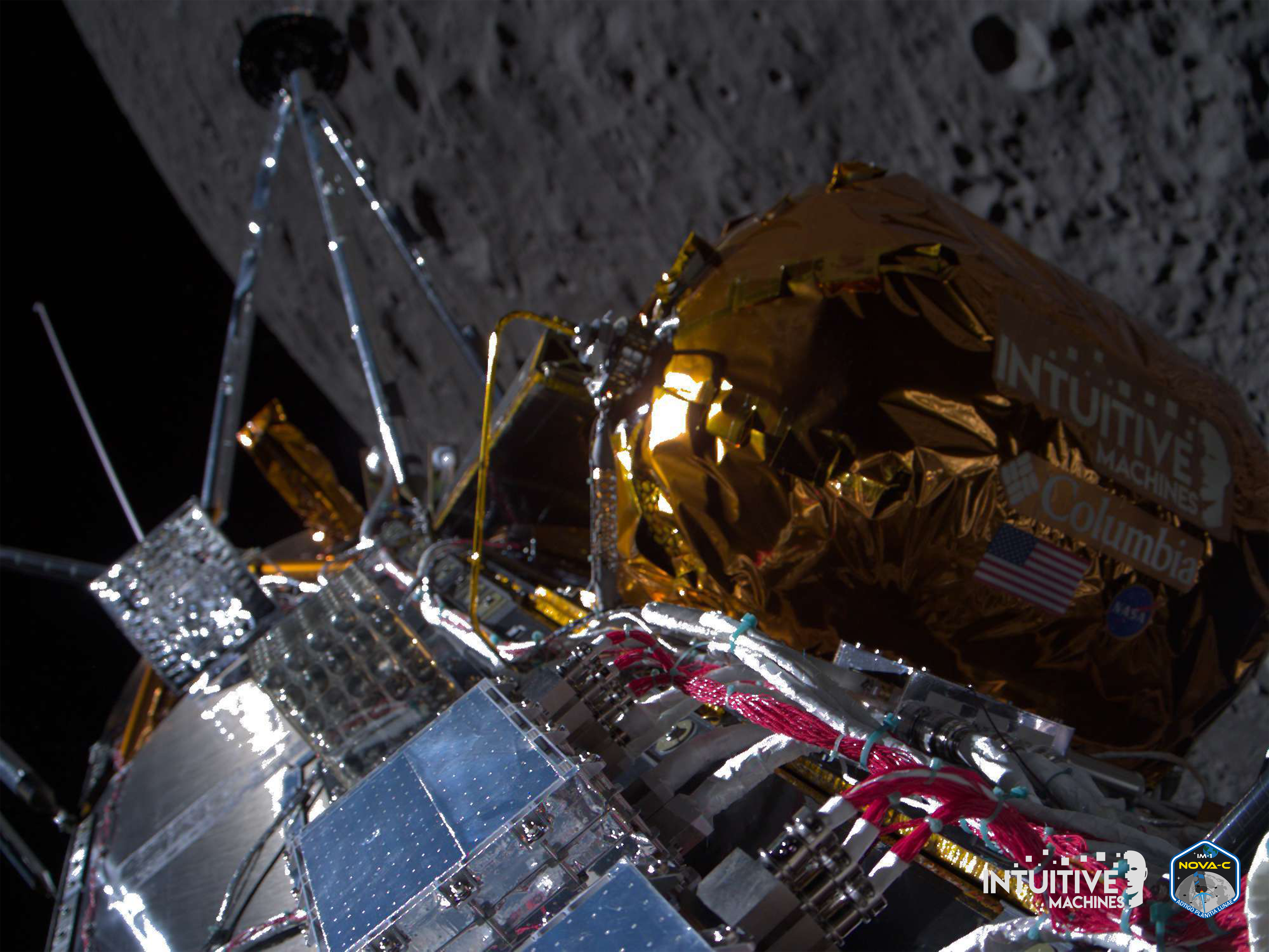
Odysseus fake?


Source: https://static.wixstatic.com/media/7c27f7_a9ef02ff09a44a36adc78a30a3959f9b~mv2.png

This spacecraft supposedly landed on the moon yesterday.  I don't know - this looks fake to me because it is so perfect and brilliant and clean. 

Source: https://www.reddit.com/r/space/comments/1axlj32/lunar_lander_odysseus_touches_down_on_the_moon/

And this is definitely photoshopped.


Source: https://www.cbsnews.com/news/moon-lander-tipped-over-on-its-side-during-touchdown/

They admit this is fake - they call it an "artist's impression".

At least the very cool looking circular mission control center in Houston is real.


What is the outstanding amount of SBA EIDL loans?

EIDL stands for Economic Injury Disaster Loan.  The SBA gave as much as $1.2 trillion of PPP and EIDL loans in 2020 and 2021, and as much as $200 billion of these are potentially fraudulent.  Most of the PPP loans have already been forgiven or paid back.

My specific question is how much of EIDL loans were outstanding as of September 30, 2022 and 2023, and how much was written off.

So as of 9/30/22, the EIDL total was $357.8 billion and as of 9/30/23, the total is $301.9 billion.  This is the Unpaid Principal Balance totals and includes only those loans that have not been charged off.  (source)

In fiscal year 2023, the SBA charged off $51.9 billion in EIDL loans.  Since the decrease in the EIDL from 2022 to 2023 was $55.9 billion, that means the actual balance decreased only $4 billion from repayment.

Does that mean there was $51.9 billion of fraud last year?  Not necessarily, there were some struggling businesses that went under.  Still, a large portion of this probably was fraudulent, because it is not too hard to make the small payments or to request a deferment. 

Friday, February 16, 2024

The Smith Family learns about the Magical Money Tree


Hey kids, here is a cool new comic book about money!  Go to https://www.mmted.org/smithfamily/episodes.php to read.  There are 12 episodes already written and more are coming.

Learn about how money really does grow on magical trees!  And about how mean old white guys who are opposed to increasing school spending are stupid.  Because the government can spend as much as it wants to, it doesn't need taxes.  How? The Central Bank just prints it.  This comic books explains it so well that even kids can understand it and be entertained.  Just don't ask any questions.

=======================

When you are done reading these, here is a comic book about how Russia tried to influence the 2020 election to elect an evil man as President of the United States, but thankfully there was a government intelligence agency that was able to stop them.

https://www.cisa.gov/sites/default/files/publications/cfi_real-fake_graphic-novel_508.pdf

Monday, February 12, 2024

$22 billion deficit in January 2024

 See https://www.fiscal.treasury.gov/files/reports-statements/mts/mts0124.pdf

and https://www.cbo.gov/system/files/2024-02/59822%C2%ADMBR.pdf

Net interest from the month was $68 billion.  The fiscal year to date net interest is up 47% from $198 billion in 2023 to $291 billion (according the CBO, but the monthly treasury statement says it is $283 billion).  The defense spending for January was $60 billion, and FYTD is $281 billion (according to the CBO, but the monthly treasury statement says it is $298 billion).  Maybe the CBO and the Treasury department number crunchers should talk to each other and get their stories straight.

Anyways a $22 billion deficit is pretty good in the grand scale of things.  In Jan 2023 it was $38 billion.

The fiscal year to date interest was only $140 billion in the Oct 2021-Jan 2022 time frame.  So it increased 41% from 2022 to 2023, and another 47% from 2023 to 2024. 

How long until the net interest exceeds $1 trillion per year?  I think it will be in fiscal year 2026.

===========

On 1/31/23, the total national debt was $31.455 trillion. On 1/31/24, it was $34.191 trillion.  This is an increase of 8.7% in one year.

Wednesday, February 7, 2024

New 10 Year Budget Projection from CBO

 So just last week, I was saying there will be a debt crisis in 2034.  Coincidentally, the CBO just released their 10 year forecast through 2034 and it doesn't seem like any sort of debt crisis will happen.  

Here are the numbers for 2034 only:

(from https://www.cbo.gov/system/files/2024-02/51118-2024-02-Budget-Projections.xlsx)


Debt at 116% of GDP (with a $2.6 trillion deficit) doesn't sound good, but it isn't the end of the world.  And if GDP increases faster than projected, which I think is likely because of inflation, then it may be possible to stabilize the debt/GDP ratio at just over 100%.  

Tuesday, February 6, 2024

Jerome Powell says a $144 trillion national debt in 2053 is unsustainable

 Another lingering problem from the pandemic is a sharp increase in the national debt. Thirty years from now, by one measure, it's projected to be $144 trillion, or $1 million per U.S. household. While Powell said the Fed tries not to comment on fiscal policy, which is determined by Congress and the White House, he did comment on the debt. "The U.S. federal government's on an unsustainable fiscal path," he said. "And that just means that the debt is growing faster than the economy. So, it is unsustainable."  It worries him in the long run. "You know, we're, effectively we're borrowing from future generations," he said. "It's time for us to get back to putting a priority on fiscal sustainability. And sooner's better than later." https://www.cbsnews.com/news/jerome-powell-interest-rates-inflation-timing-60-minutes/

See also:  https://budget.house.gov/imo/media/doc/cbo_outlook_shows_share_of_debt_is_projected_to_grow_to_1_million_per_american_household.pdf

Note: The report it is referencing is the CBO June 2023 Long-Term Budget Outlook.  This report doesn't actually mention $144 trillion, but it is calculated from the projected GDP in 2053 of $79.5 trillion times the Debt Held by the Public to GDP ratio of 181%.

As an interesting hypothetical, I recently did another calculation showing the GDP could be as much as $135 trillion in 2053.  If the debt to GDP ratio is the same this would be a debt to the public of $244 trillion.  Is this possible since the current debt to the public is $27 trillion?  Believe it or not, the answer is yes,  if the debt doubles about every 9 years, which is what is has been doing.  What would the interest on that be if the rate is 5%?  It would be $12 trillion in interest per year.  

Is this sustainable?  The devil's advocate would say, yes because it isn't at infinity yet.  If it's not sustainable, then when did it become unsustainable?  Is it already unsustainable?  It seems like the answer is no, that it is not unsustainable at the moment, but we are rapidly approaching that point.

See also https://www.schiffsovereign.com/trends/the-fed-asks-america-to-fill-in-the-blanks-_______-150091/  "a more conservative estimate of the national debt is probably closer to $60 trillion or more by 2033"

============

Update: According to the last Financial Report of the US, the Debt to the Public could reach 531% of GDP by 2098. What would this be in dollars, if you use my projection? In 2098, the GDP will be $1.518 quadrillion, so the Debt will be $8 quadrillion. At an interest rate of 5%, the annual interest would be $400 trillion per year. Ok, these numbers are ridiculous, but why are they unsustainable just because the numbers are so high?

Tuesday, January 30, 2024

Jamie Dimon sees debt crisis in 2034

 Jamie Dimon says mounting US debt will eventually spark a 'rebellion' in global markets.  Mounting US debt will eventually spark a "rebellion" in markets around the world, JPMorgan CEO said. That's because $7.6 trillion of US government debt is held by foreign entities in countries like Japan and China. "It is a cliff. We see the cliff. It's about 10 years out. We're going 60 miles an hour," Dimon said. The US's mountain of debt hasn't gone anywhere — and that's a big problem for markets around the world, Jamie Dimon warned at a panel decision in Washington with the Bipartisan Policy Center on Friday. The US debt-to-GDP ratio looks like a hockey-stick chart — or one that starts relatively sideways before eventually spiking — JPMorgan CEO Dimon explained. He expects the measure to hit 130% by 2035.  https://finance.yahoo.com/news/jamie-dimon-says-mounting-us-050516886.html

This is the same time as the Social Security crisis is going to hit.

Just for fun, let's pick a date. How about Friday, September 29, 2034. That is the last business day in the fiscal year.  Maybe there will be a stock market crash that day, or interest rates will soar above 20%?  

GDP is now $27.9 trillion

 Current‑dollar GDP increased 4.8 percent at an annual rate, or $328.7 billion, in the fourth quarter to a level of $27.94 trillion.  https://www.bea.gov/news/2024/gross-domestic-product-fourth-quarter-and-year-2023-advance-estimate

Debt to the Public is $27.0 trillion, so the ratio is 96.6%.

Wednesday, January 24, 2024

$27 trillion debt held by the public and $34 trillion total debt outstanding


As of yesterday, January 23, 2024, the debt held by the public hit $27.003 trillion and the total public debt hid $34.109 trillion.  I was waiting for both of these to hit the next trillion dollar mark before posting anything about it.  

This was only about 4 months after the previous milestones were reached. The $26 trillion debt held by the public was first reached on 8/31/2023, and the $33 trillion total debt was first reached on 9/15/2023. 

And it was only 3 months prior to this that the $25 trillion debt to the public was hit on 6/5/23 and the $32 trillion total debt was hit on 6/15/23.  

So we (I like to think that I participated in this awesome achievement!) spent $2 trillion in only 7 months. 

When did debt held by the public reach $13.5 trillion? On 11/27/2015.  So it took about 8 years to double.  If current trends continue, this will be at $54 trillion on about 1/23/2032.

When did the total debt first reach $17 trillion? On 10/17/2013.  This took about 10 years to double.  So total debt should reach $68 trillion on about 1/23/2034.  Note that the total debt was $8.5 trillion on 9/29/2006.

The next milestone of $28 trillion debt to the public and $35 trillion national debt should hit about July 1, 2024.

Tuesday, January 16, 2024

Are Aliens Real?


Starring David Grusch, whistleblower.


All-domain Anomaly Resolution Office (AARO)  https://www.aaro.mil/

==================
A former intelligence official [David Charles Grusch] turned whistleblower has given Congress and the Intelligence Community Inspector General extensive classified information about deeply covert programs that he says possess retrieved intact and partially intact craft of non-human origin.

Friday, January 12, 2024

Deficit of $128 billion in December 2023

 See Monthly Budget Review: December 2023 (cbo.gov)

mts1223.pdf (treasury.gov)

The federal government incurred a deficit of $128 billion in December 2023, CBO estimates— $43 billion more than the deficit recorded in December 2022.  (This is really bad - it is the 2nd highest December deficit ever, after a $140 billion deficit in December 2020.)  The federal budget deficit totaled $509 billion in the first quarter of fiscal year 2024, the Congressional Budget Office estimates. That amount is $87 billion more than the deficit recorded during the same period last fiscal year: Although revenues this year were $83 billion (or 8 percent) higher, outlays rose more—by $170 billion (or 12 percent). (The FYTD deficit is also the second highest ever behind FY2021.)

Net Interest for the month was $68 billion, and YTD net interest is $221 billion.  Defense spending for the month is $81 billion.

========

On 12/30/22, the national debt was $31.420 trillion.  On 12/31/23, it was $34.001 trillion.  So it grew 8.2% in one year.

Thursday, January 4, 2024

Projected Nominal GDP through 2100.

 This is the projected US Nominal GDP through 2100.  This comes from the Social Security Trustees report at: https://www.ssa.gov/OACT/TR/2023/VI_G2_OASDHI_GDP.html, using the low-cost estimates.  I interpolated and rounded the numbers.  These show growth of about 5.5% per year.

Year	GDP
2024	28,800
2025	30,700
2026	32,500
2027	34,400
2028	36,200
2029	38,200
2030	40,300
2031	42,500
2032	44,800
2033	47,200
2034	49,700
2035	52,400
2036	55,200
2037	58,100
2038	61,200
2039	64,500
2040	67,900
2041	71,600
2042	75,400
2043	79,500
2044	83,700
2045	88,200
2046	93,100
2047	98,200
2048	103,500
2049	109,200
2050	115,100
2051	121,500
2052	128,100
2053	135,200
2054	142,600
2055	150,500
2056	158,900
2057	167,700
2058	177,000
2059	186,800
2060	196,800
2061	207,500
2062	218,800
2063	230,700
2064	243,200
2065	256,800
2066	270,700
2067	285,300
2068	300,800
2069	317,000
2070	334,500
2071	352,800
2072	372,000
2073	392,300
2074	413,700
2075	436,100
2076	460,000
2077	485,200
2078	511,800
2079	539,900
2080	570,600
2081	602,600
2082	636,400
2083	672,200
2084	709,900
2085	749,500
2086	791,600
2087	836,000
2088	882,900
2089	932,500
2090	985,600
2091	1,040,700
2092	1,098,900
2093	1,160,400
2094	1,225,300
2095	1,292,800
2096	1,364,000
2097	1,439,100
2098	1,518,300
2099	1,602,000
2100	1,690,100
Most models use percent of GDP, so these are the numbers to use.

========
Update:  Here are the 2024 similar numbers: https://www.ssa.gov/OACT/TR/2024/VI_G2_OASDHI_GDP.html .  These numbers are slightly different than those above.
This shows Intermediate, Low-cost, and High-cost numbers.  The low-cost numbers have the highest GDP and I adopt this assumption because there is no way the system can survive otherwise.  We need a higher GDP so the debt-to-GDP ratio is lower.

Wednesday, December 20, 2023

Unidentified Anomalous Phenomena

 Unidentified Anomalous Phenomena (UAPs) is the current term for what used to be called Unidentified Flying Objects (UFOs).  Luis Elizondo, the former director of the Advanced Aerospace Threat Identification, believes that there is "technology" (i.e. flying objects) that is interested in nuclear technology, including nuclear power and nuclear weapons, that did not come from the United States and didn't come from Russia or China either.  There is no proof that these objects came from outer space, but there is no proof that they didn't.

Luis Elizondo said he believes the report will say there are around 100 UAP cases compelling enough to warrant further scrutiny, and that we don’t know what UAPs are or where they come from. “If this turns out to be some sort of adversarial technology that did happen to technologically leapfrog us, 180 days I don’t think is going to be sufficient. I think what we can expect the report to say is something like this: There are about a hundred some-odd cases out there that are compelling enough, that they are definitely displaying some sort of capability, technology that we don’t have. Secondly, we don’t know what these things are. We have no evidence to suggest that they are from outer space, but at the same time, we have no evidence to suggest that they’re not.”

Luis Elizondo says the new report on UAPs definitely states the observed technology is not of the U.S.’s creation, and says he doesn’t believe its from China or Russia either. “As of this week… discussions at senior level leadership that this report has definitively stated once and for all that it’s not our technology…. So that really only leaves two other options, and again it’s foreign adversarial or it’s something quite different. And I think as we’re now beginning to learn as we’ve heard from the director of national intelligence and I can certainly tell you from my experience, that we’re pretty confident that it’s not Russian or Chinese technology.”

https://www.washingtonpost.com/washington-post-live/2021/06/08/ufos-national-security-with-luis-elizondo-former-director-advanced-aerospace-threat-identification-program-aatip/

He is talking about a report, but where is the report?

Maybe this is the report, but it is only 9 pages long.  

See also https://aftermath2022.blogspot.com/2022/07/new-project-bluebook.html

Update: UFO caught on camera hovering over Air Force 1 at LAX during Joe Biden's fundraising trip to Los Angeles

Airplane enthusiasts Joshua and Peter Solorzano were filming at LAX airport on Sunday December 10, hoping to catch Air Force 1. But at 10.18am while running their livestream for their popular YouTube channel LA Flights, they spotted a white sphere zooming across the screen. Three minutes later the object appeared again flitting across the top right of the camera view as it trained on the KC-10. The object appeared a third time at 11.08am directly over cameraman Joshua Solorzano. He can be heard on the livestream saying: ‘It’s directly above us. It is moving, it’s not a star. I’m telling you they’re flying in from the ocean. Very strange right now.’ Joshua said he thought it was a balloon, but Peter referred to it as a ‘UAP’ – the government’s preferred term for Unidentified Anomalous Phenomena.

Monday, December 18, 2023

Did Eisenhower sign a treaty with space aliens?

 This sounds crazy but here are some links.  It would be more believable if someone could give the exact date (either sometime in 1954 or 1955) and place (Edwards Air Force Base in California, or Holloman Air Force Base in New Mexico).

1) Majestic 12 and the Secret Government  William Cooper says a treaty was signed sometime in 1954 at Edwards. 

Later in 1954 the race of large nosed gray aliens which had been orbiting the Earth landed at Holloman Air Force base. A basic agreement was reached. This race identified themselves as originating from a planet around a red star in the Constellation of Orion which we call Betelgeuse. They stated that their planet was dying and that at some unknown future time they would'nt be able to survive there. This led to a second landing at Edwards Air Force base. The historical event had been planned in advance and details of the treaty had been agreed upon. Eisenhower arranged to be in Palm Springs on vacation. On the appointed day the President was spirited away to the base and the excuse was given to the press that he was visiting a dentist.  President Eisenhower met with the aliens and a formal treaty between the Alien Nation and the United States of America was signed. We then received our first Alien Ambassador from outer space. 

2) Post on Reddit: Did President Eisenhower Meet With Aliens at Holloman Air Force Base?

The Redditor says that Ike signed a treaty with the grays at Holloman in February 1955, citing Timothy Good as a source. 

In February 1955, approximately 300 people saw Air Force One land at Holloman AFB and taxi back out to the end of the runway. The respected author and former pentagon consultant, Timothy Good, came forward in 2012 to talk about Ike’s meetings with ETs.  Ultimately, Eisenhower Signed A Treaty with an alien race called Alien Grays.

3) The Greada Treaty  This article uses William Moore as a source, and says that Ike met with both the Nordics and Greys on February 20-21, 1954 at Edwards and signed the Greada Treaty with the Greys.  

On the night and early hours of February 20 - 21, 1954, while on a 'vacation' to Palm Springs, California, President Dwight Eisenhower went missing and allegedly was taken to Edwards Air force base, previously Muroc Airfield, for a secret meeting and signed the Greada Treaty.

4)  Phil Schneider said that Eisenhower signed the Greada Treaty in 1954 at Holloman.  There isn't a wikipedia article about Phil Schneider.  I saw a Youtube video on him speaking in 1995 where he made this claim.

5) Gerald Light wrote a letter in April 1954 describing the meeting of Eisenhower with space aliens at Muroc (Edwards).  The letter doesn't mention the words "treaty" or "ufos" or "aliens", but it does mention "Etherians".  (Are these nordics or greys?).

Anyways, this is interesting enough to write a short blog post, but since nobody can agree on when and where this supposed treaty was signed, it seems more likely to be fiction.  Click the links if interested and see if you can figure it out.

========================

Update:  Here is yet another story of the supposed treaty.  The source is Timothy Good.  Again, there is no date, just sometime in 1954 in New Mexico.  https://www.dailymail.co.uk/news/article-2100947/Eisenhower-secret-meetings-aliens-pentagon-consultant-claims.html

Former American President Dwight D. Eisenhower had three secret meetings with aliens, a former US government consultant has claimed. The 34th President of the United States met the extra terrestrials at a remote air base in New Mexico in 1954, according to lecturer and author Timothy Good.

============================

Update 2:  This just gets weirder and weirder. Laura Eisenhower, Ike's great granddaughter, claims that Ike did meet aliens at Edwards in 1954, but didn't sign a treaty.  MJ-12 signed the treaty behind his back.  See https://app.podscribe.ai/episode/89238545 (podcast date 10/20/23, so this is recent). Her source is a guy named Dan Cooper (unknown if he is related to William Cooper) who calls himself "Senior Advisor to the Earth Alliance".

 ===========================

Update 3: Even weirder.  See https://exopolitics.org/secret-space-programs-more-complex-than-previously-revealed/  and https://disclosure.fandom.com/wiki/U.S._Marine_Corps_Special_Section . There was a secret space program supposedly authorized by Truman and Eisenhower.  "Eisenhower, having realized that he can't trust MJ-12, created a new military apparatus from scratch. USMC s.s. was to act as a counterbalance to MJ-12 long after Eisenhower left office."

If you google "Randy Cramer" and "space" a lot of bizarre stuff pops up.

This would make an interesting science fiction book.

Tuesday, December 12, 2023

2023 Social Security Report

 The 2023 Social Security Trustees Report was released about April 1, 2023 but I didn't comment on it.  Here are the key findings. 

Under the Trustees’ intermediate assumptions, OASDI cost is projected to exceed total income in 2023, and the dollar level of the hypothetical combined trust fund reserves declines until reserves become depleted in 2034, one year earlier than projected in last year’s report.

The open-group unfunded obligation for OASDI is $22.4 trillion in present value over the 75-year projection period through 2097 and is $2.0 trillion more than the measured level of $20.4 trillion over the 75-year projection period through 2096 in last year’s report.

The OASI Trust Fund reserves are projected to become depleted in 2033, at which time OASI income would be sufficient to pay 77 percent of OASI scheduled benefits.

Monday, December 11, 2023

The Closure Rule

The Closure Rule is a modelling assumption that revenues (that is taxes) will dramatically increase at some point in the future.  It is basically the economic equivalent of magic fairy dust.  It assumes that something will happen in the future to magically make everything alright.  It is based on wishful thinking.  

It is generally not well understood outside tight academic and DC modeling circles that these models effectively crash when trying to project future macroeconomic variables under current fiscal policy. The reason is that current fiscal policy is not sustainable and forward-looking financial markets know it, leading to the economy “unraveling” through “backward induction”. Instead, in practice, the workhorse OLG model is generally “fixed” by augmenting it with an additional assumption---namely, a future fiscal policy action that is actually contained in current law. This modelling fix (also called “closure rule”) springs into action at a future date to stabilize the amount of debt held by the public relative to GDP. It often takes one of several alternative forms: a broad-based value-added tax (VAT); a proportional wage tax (not subject to any payroll tax ceiling); a proportional income tax; a broad-based reduction in spending; or, some combination of each. Both PWBM and CBO typically have this rule kick in the year 2050 or later, potentially with some gradual introduction. As it turns out, the exact form of the broad-based closure rule---for example, whether it is a VAT or some other tax---is not that important in terms of economic effects. What is important is that a large broad-based future corrective change in fiscal policy happens in any form to stabilize the debt-GDP ratio, and that such a correction action is anticipated by financial markets. Otherwise, forward-looking financial markets would unravel much sooner---a process known as “backward induction”---to cause a sovereign debt crisis. https://budgetmodel.wharton.upenn.edu/issues/2023/10/6/when-does-federal-debt-reach-unsustainable-levels

So, at some point, taxes will magically increase in the future to stabilize the model.  The modellers typically use a date of 2050 or 2060.  I think an earlier date will be required.  The Social Security Trust fund will be depleted in 2034.  Everyone just assumes that either A) benefits will be cut and no one will complain, or B) benefits will just be paid with no pain to anyone.  I don't think either of those assumptions are correct.  I think that the benefits MUST be paid and that taxes MUST increase drastically to pay for the fix.  So I would use 2034 as the date.  The system MUST be fixed by 2034 or "backward induction", which is an explosion in the time-space continuum traveling backwards in time, will occur, causing the system to blow up.  That's what I think - we have 11 more years to fix the system, or it will blow up. 

November 2023 deficit was $317 billion

 The federal government incurred a deficit of $317 billion in November 2023, CBO estimates— $68 billion more than the deficit recorded last November. https://www.cbo.gov/system/files/2023-12/59726-MBR.pdf  The [cumulative] federal budget deficit totaled $383 billion in October and November 2023, the first two months of fiscal year 2024.

YTD defense spending was $150 bn.  Since it was $87 bn in October, November was $63 bn.

YTD net interest was $153 bn, so November was $77 bn.

The debt to the public increased from $26.330 trillion on 9/30/23 to $26.844 trillion on 11/30/23,  and increase of $514 billion.  The Treasury General Account (TGA) increased from $679 bn on 9/30/23 to $754 bn on  11/29/23, an increase of $75 billion.  

So the actual spending YTD was $439 billion (The $514 bn increase less the $75 bn increase in TGA). I would say we are still on track to exceed a $2 trillion deficit in FY 2024, which would make it the 3rd highest ever, behind 2020 and 2021.

Also note that revenues were only $275 bn in November and net interest in November was $77 bn, so net interest was 28% of revenues.

============

On 11/30/22, the total national debt was $31.371 trillion, and on 11/30/23 it was $33.879 trillion, so it increased almost exactly 8.0% from the year previous.

Friday, November 17, 2023

Maybe compounding interest isn't a problem

 Read: https://www.msn.com/en-us/money/savingandinvesting/a-bond-doom-loop-should-mean-that-yields-rise-with-more-borrowing-but-history-says-the-opposite/ar-AA1k6e4V 

A bond 'doom loop' should mean that yields rise with more borrowing — but history says the opposite Story by fdemott@insider.com (Filip De Mott)

"But just as increases in corporate defaults tend to be sparked less by looming debt maturities and more by collapses in earnings, so fiscal crises in bond markets tend to be driven less by the inevitability of compounding interest payments and more by sudden collapses in credibility, currency runs and imported inflation," he said.

Also:

https://www.ft.com/content/d5c99487-11e1-4a68-aece-5a26f65dea7f

The third reason why large deficits are not associated with high bond yields is that, contrary to intuition, most borrowing is much closer at a system level to being self-funding than is widely recognised. You don’t need to work in an investment bank’s syndicate department to see the intrinsic logic in the statement that “someone needs to buy” each bond issue. Usually this involves a private investor withdrawing deposits from their bank account. But take a moment to consider the process as a whole. Provided the proceeds from the bond sale are at some point spent in the real economy, they produce an increase in bank deposits which exactly offsets the amount the private investor drew down for the purchase. Total bank deposits — or narrow money — are left unchanged.